
The start of the industrial use of semantic AI was in defense of the United States following 9/11. Current statistical AI models like LLM were developed decades later to avoid having to code meaning and understanding to compete.
The motivation was the work of Berners-Lee Reference Data Framework based on an ontology model. Web 1.0 could not resolve meaning essential to warfare.Web 3.0 could But only if knowledge acquisition was automated. That was the hard problem. After all what good was a Relational Data Model if there is no ETL or meta-data model?
There is no free lunch. After 4 years and a US trillion dollar investment the existential flaws of LLM only become more apparent. This paper provides a very different viewpoint of 21st century AI. Current AI can not be safely used in counterintelligence and likely not in other critical applications. Never will without the full domain knowledge which Intellisophic provides.
Intellisophic was the backbone of the counterintelligence response to the 9/11 terrorist attack.
The Joint Counterintelligence Assessment Group (JCAG) was the nerve center of the war on terrorism. Intellisophic provided the operational system called Indraweb shown in the diagram below. Both Indraweb and Integrity are products supplied by the Intellisophic founder team.
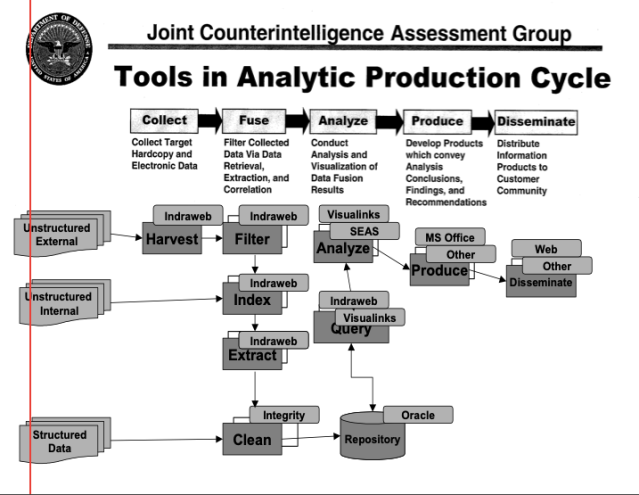
The resulting analytic platform used to produce and disseminate intelligence was called the MOSAEC (Multisource Open Source Analysis and Exploitation Center) system.
The MOSAEC Analyst Interface
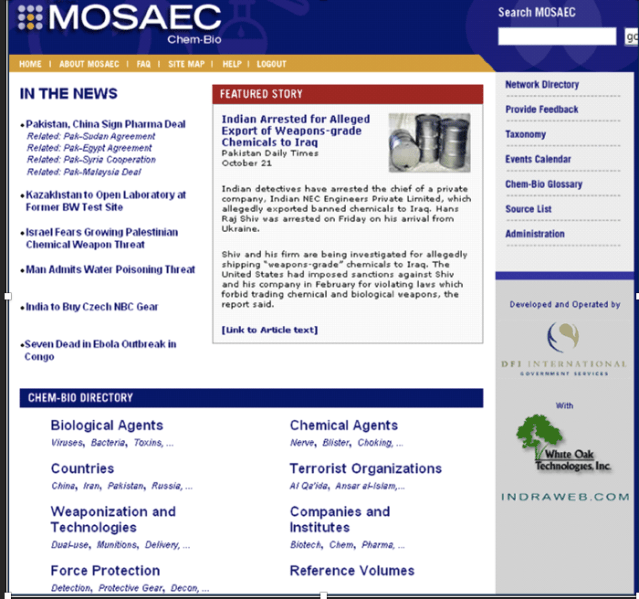
Indraweb provided the domain specific ontologies for MOSEAC as indicated on the MOSAEC Chem-Bio home page .
The purchase of the knowledge to power MOSEAC Chem-Bio and other risk domains was COTS (commercial off the shelf). The Intellisophic founders took all the financial risk as patriots not contractors.
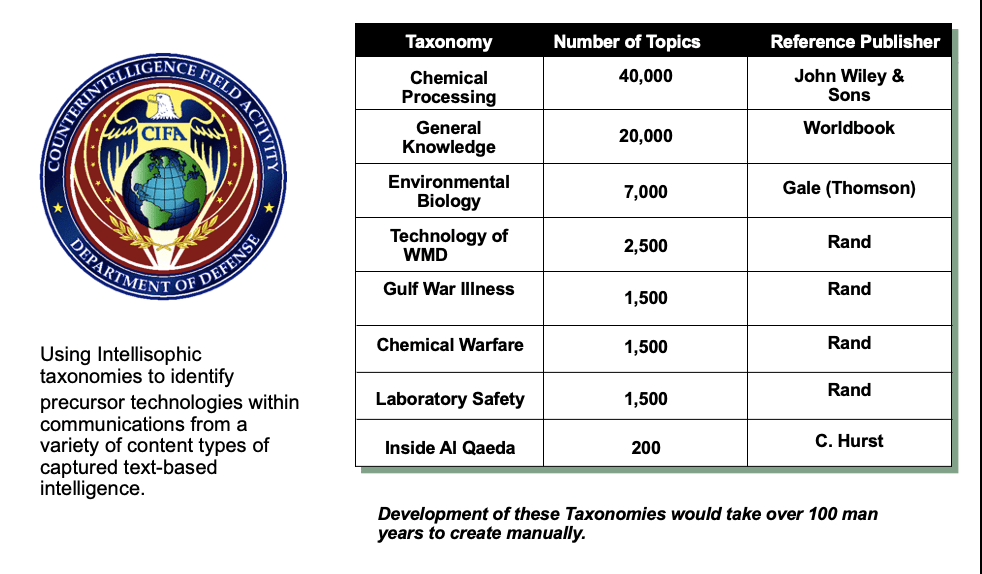
- Purpose:
- IndraWeb was designed to analyze and integrate vast amounts of open-source intelligence (OSINT) from multiple sources, including public websites, news outlets, academic publications, and other unclassified data streams.
- It aimed to improve the efficiency, speed, and accuracy of intelligence gathering by leveraging Indraweb’s semantic search, categorization, and knowledge representation technologies.
- Key Features:
- Multisource Integration: Indraweb processed and fused data from a variety of open-source and internal feeds, enabling analysts to create a unified intelligence picture from disparate sources. The Integrity product provided the data quality needed to connect the dots.
- Semantic Search Capabilities: Using tools like CQL (Concept Query Language) and taxonomies, Indraweb allowed analysts to find relevant information with high precision, filtering out irrelevant data.
- Classification and Taxonomy Use: The system employed taxonomic knowledge bases to classify and organize data by concepts, improving the relevance and contextual accuracy of search results.
- Threat Analysis and Scenario Modeling: MOSAEC used concept based red-team threat profiles and concept based search from Indraweb to automate the detection of patterns and trends related to threats, such as terrorism, WMD proliferation, and other national security concerns.
Other Intellisophic Technology Contributions:
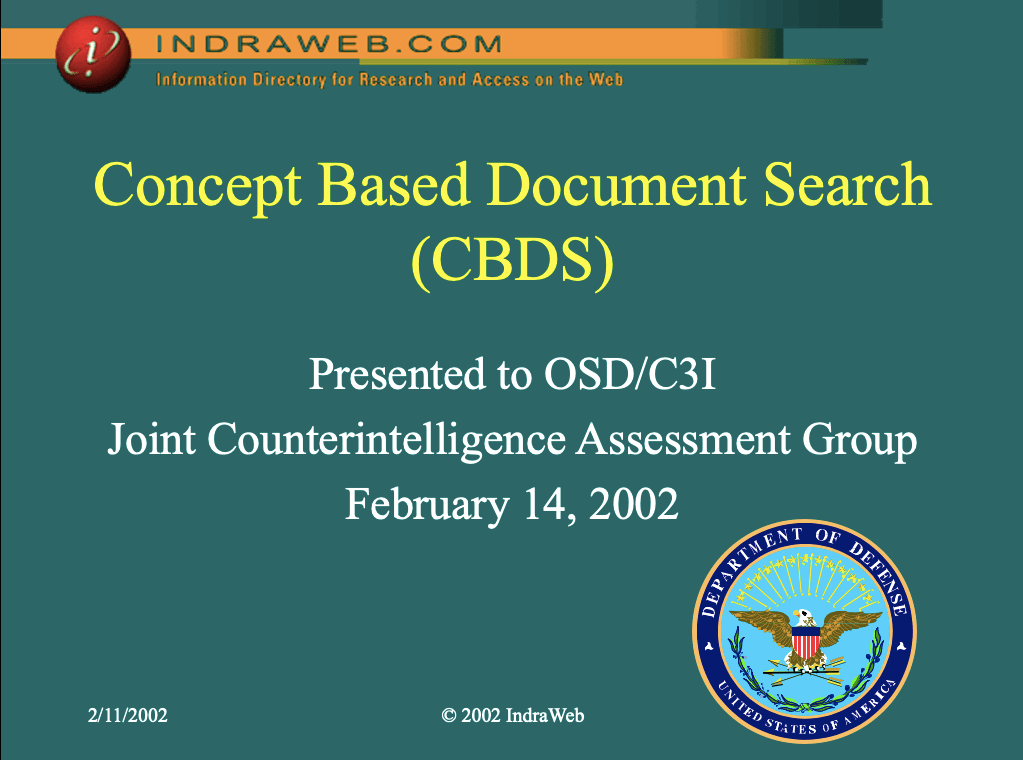
Indraweb (Intellisophic) provided the concept-based document search systems (CBDS), taxonomies, and semantic search technologies that powered MOSAEC’s core functionality.
- Indraweb’s CQL and taxonomy creation tools (e.g., Orthogonal Corpus Indexing) were especially relevant for organizing and querying unstructured OSINT data.
- Focus Areas: MOSAEC focused on analyzing threats such as: Weapons of Mass Destruction (WMDs): Including chemical, biological, radiological, and nuclear threats. Indraweb provided the knowledge and systems for the analyst.
Challenges and Legacy
Challenges:
- Data Overload: In 2004 even with with advanced tools, the sheer volume of OSINT data required constant refinement of algorithms and workflows. By 2015 processing work flow reached 1000x the 2005 results.
- Integration with Classified Systems: Bridging the gap between open-source and classified intelligence systems was a technical and procedural challenge. This continues to day but new technologies including blockchain are being tested.
- Evolving Threats: Intelligence needed to adapt quickly to new and emerging threats, requiring continuous updates to taxonomies and search parameters. Drone technology has been added since the Russian invasion of Ukraine.
Since 2000 Intellisophic has added millions of new domains to its private taxonomy catalog starting at 400,000 in 2004 reaching more than 8 million today. The Intellisophic inventory of licensed text books contains millions more
Legacy:
- Intellisophic laid the groundwork for subsequent OSINT systems within the U.S. intelligence community.
- In 2010 Intellisophic added social media web sites to its knowledge harvesting providing SMINT as a product.
Conclusion
Indraweb and MOSAEC represented a significant step forward in the intelligence community’s ability to leverage open-source data for actionable insights. Powered by technologies from the leading semantic AI provider it demonstrated the potential of concept-based search and classification in streamlining intelligence workflows.
Indraweb Met the Most Stringent Competitive Requirements Dominating Other Vendors
The following slide describes the reason for selecting Indraweb as Vendor 1. The Counter Intelligence Field Activity (CIFA) managed the 9/11 procurement process. MITER supervised the performance testing.
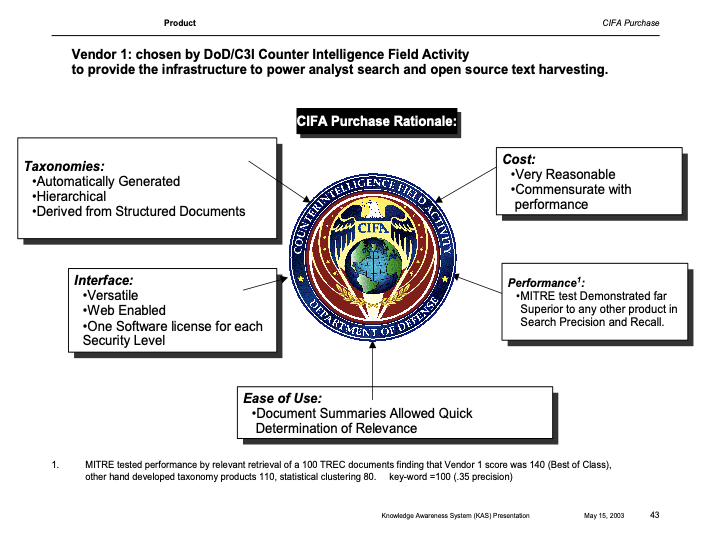
CIFA tested the major vendors including an In-Q-Tel knowledge management company (Verity) and an industry leading search software (Convera). In terms of performance the clear winner was a system based on automated large scale taxonomies (Indraweb).
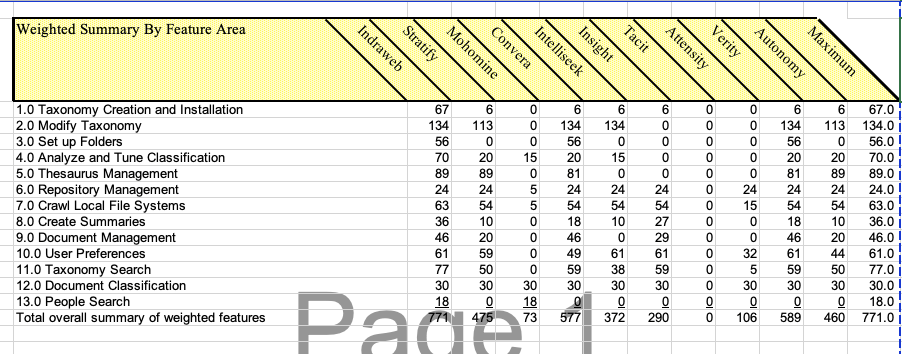
Intellisophics competition listed on the score card above were all world class and well known. Autonomy and Verity had a $14B market value. Intellisophic consistently was best in category by large margins with a team of 10 developers. Two decades later the team has grown to over 100 semantic Ai engineers serving specific global enterprise knowledge domains in Pharma, Legal, Document Management and others.
Performance
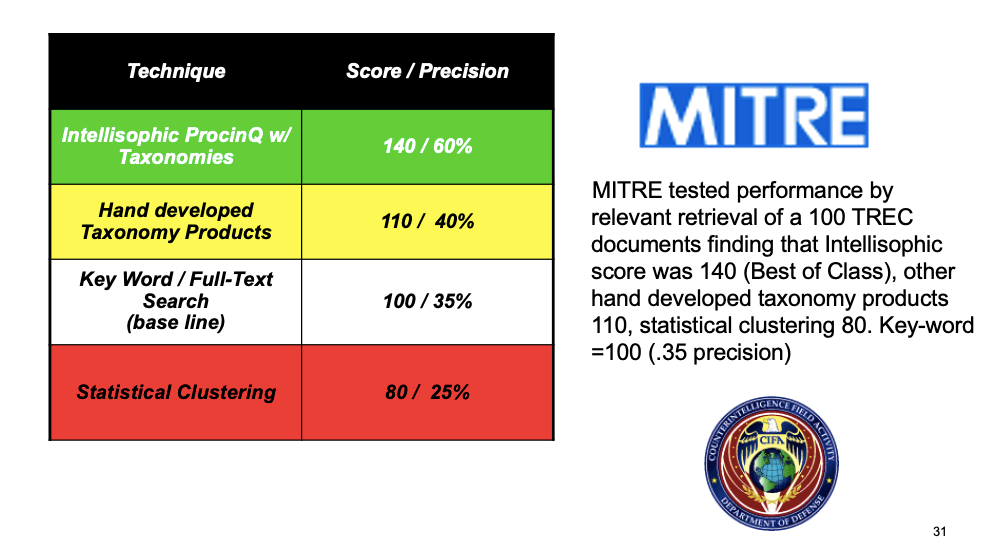
Intellisophic dominated the competition in every TREC category. No current LLM based system has met realistic CI requirements.
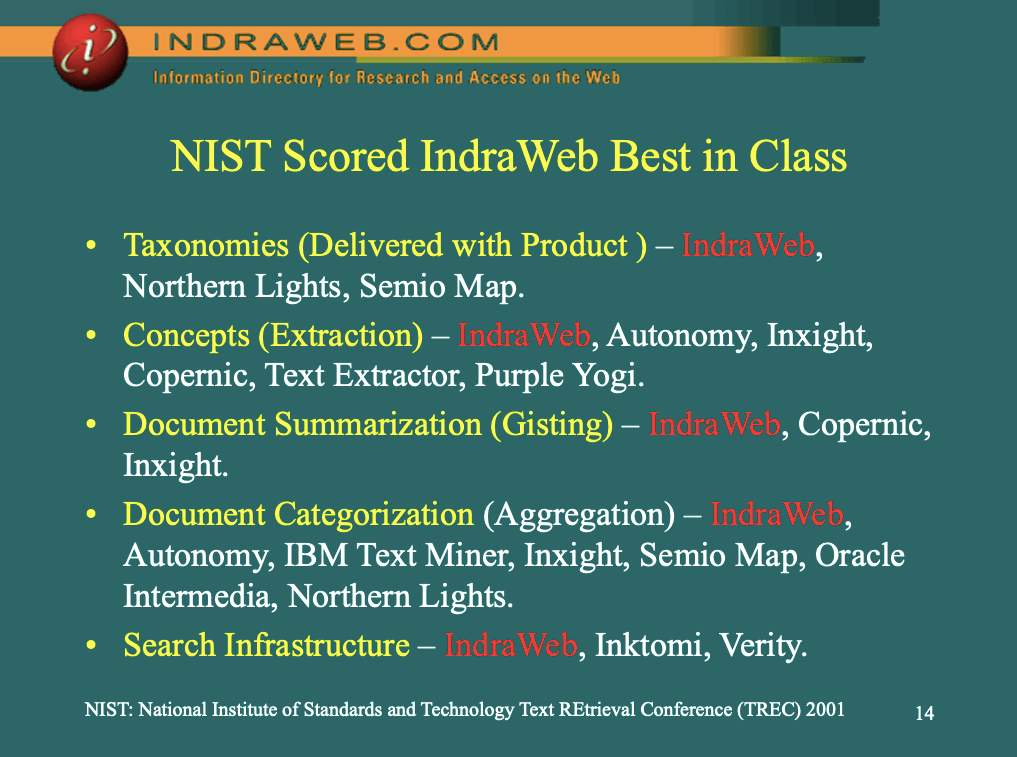
The Face of Semantic AI Leadership
The MIT Foundation (1964-1970)
Our founder, George Burch, began his AI journey in 1964 at MIT’s Artificial Intelligence Laboratory. He was a member of the Operations Evaluation Group, an MIT run think tank.
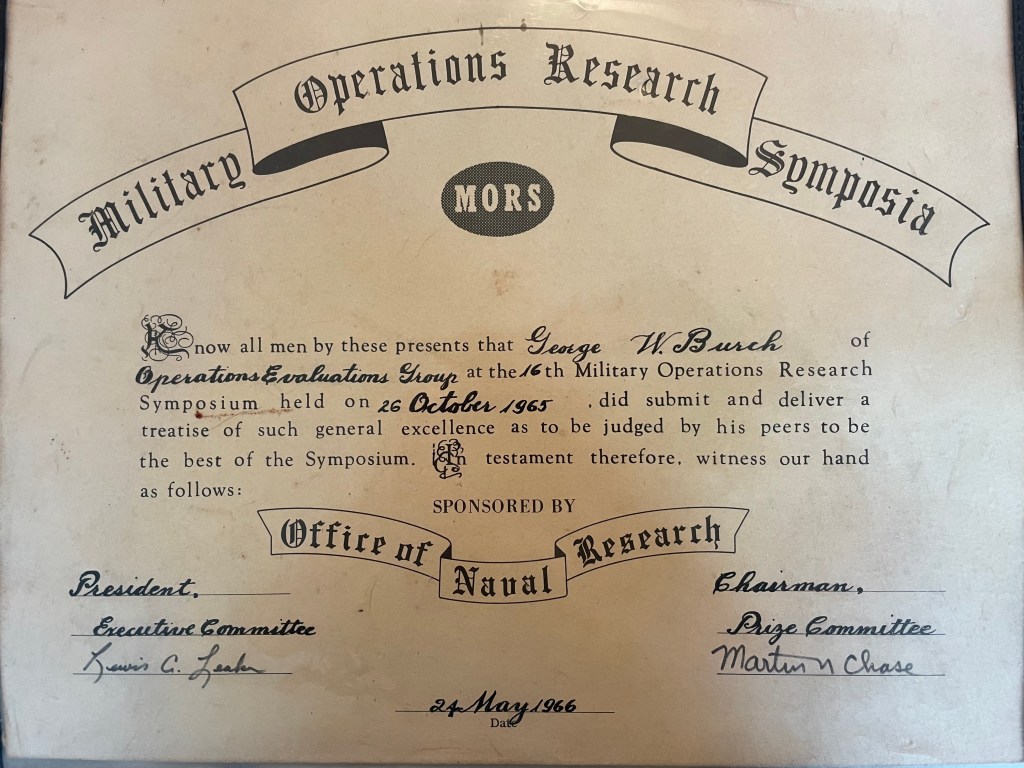
Working with pioneers like John McCarthy, George learned to use Lisp to build symbolic AI systems that manipulate meaningful symbols rather than just statistical patterns. His breakthrough came in 1965 when he solved a critical Cold War defense scenario by combining semantic understanding using symbolic AI with operational research, earning best presentation at the Military Operations Research Society Symposium.
During the Vietnam War (1967-1969), Burch applied these techniques to counterintelligence, developing models that disrupted enemy supply lines. His work earned a Presidential commendation and proved that AI could deliver results in life-or-death situations.
George Burch was in the first graduating class of the United States Air Force Academy.
He received the Senatorial Medal of Freedom in 2002 for his contribution to the 9/11 War on Terrorism.
 Intellisophic